

Why Moroccan Kasbahs Were Built From Mud and Still Stand Today
Across southern Morocco, massive earthen fortresses rise from desert valleys and rocky landscapes as if they were part of the land itself. These structures, known as kasbahs, remain one of the most recognizable symbols of Moroccan architecture and desert heritage.
For many travelers visiting places like Aït Ben Haddou, Ouarzazate, Skoura, or the Draa Valley, the first question is often the same: how can buildings made from mud survive for hundreds of years?
At first glance, kasbahs appear fragile compared to stone or concrete structures. Yet many of them endured extreme desert heat, seasonal rain, strong winds, and centuries of history while continuing to dominate the landscape of southern Morocco.
The answer lies in traditional Amazigh architecture, intelligent climate adaptation, and building techniques perfectly suited to desert environments.
Far beyond simple defensive structures, kasbahs represent an important part of Morocco’s cultural identity, family history, caravan trade routes, and architectural heritage.
What Is a Moroccan Kasbah?
Desert Fortresses of Southern Morocco
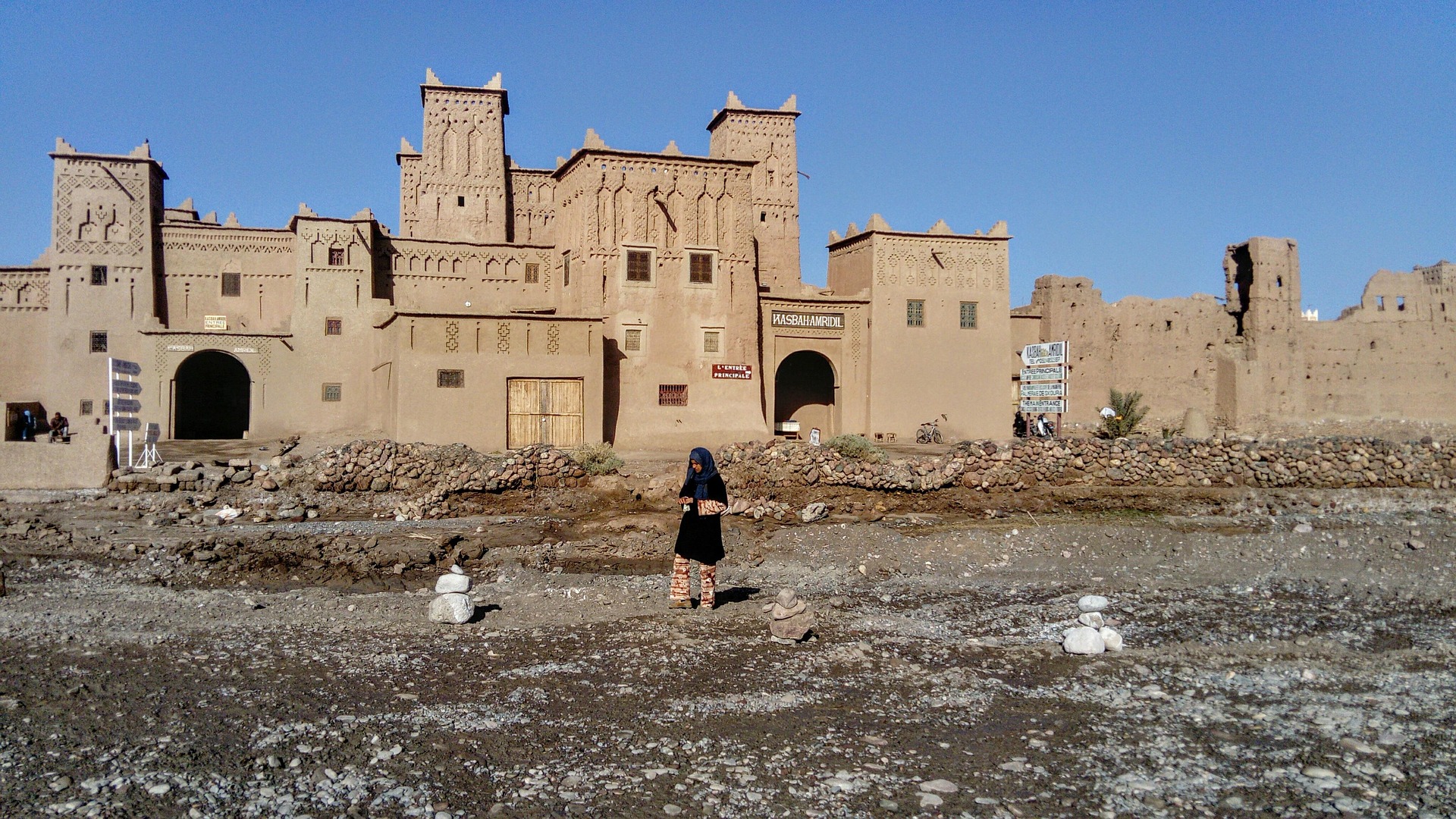
A kasbah is a fortified building traditionally used as a family residence, defensive structure, or local power center.
Kasbahs are especially common in southern Morocco and along ancient caravan routes crossing the Sahara.
Historically, they were used by:
- Amazigh families
- Tribal leaders
- Merchants
- Local rulers
Some kasbahs housed a single powerful family, while others protected entire communities.
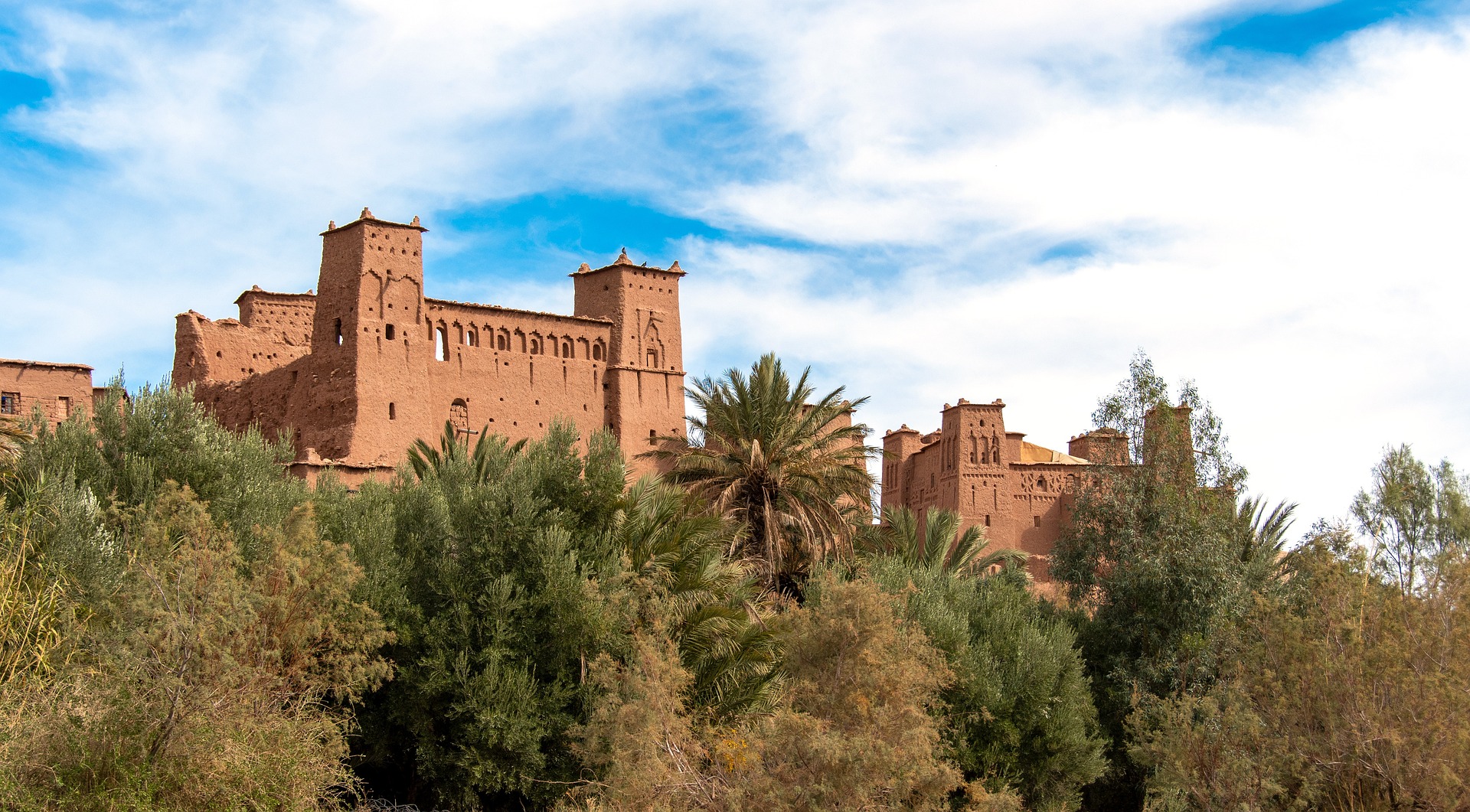
Most kasbahs are recognized by their:
- Tall walls
- Corner towers
- Earth-colored appearance
- Decorative geometric patterns
- Small windows designed for protection and climate control
Why Were Kasbahs Built From Mud?
Natural Materials Available in the Desert
The main reason kasbahs were built from mud is simple: desert regions lacked large forests and abundant stone resources.
Builders used materials available directly from the surrounding environment, including:
- Earth
- Clay
- Straw
- Water
- Palm wood
These materials were inexpensive, accessible, and highly effective for desert climates.
Traditional builders created strong walls using a mixture known as pisé or rammed earth construction.
This technique compressed wet earth into thick walls capable of lasting for generations when properly maintained.
Mud Architecture Works Better in Desert Climates
Natural Temperature Control
One of the greatest strengths of earthen architecture is temperature regulation.
Desert regions experience:
- Extremely hot daytime temperatures
- Cold nights
- Dry air
- Intense sunlight
Thick mud walls absorb heat slowly during the day and release it gradually at night.
This natural insulation helps keep interiors:
- Cooler during hot afternoons
- Warmer during cold desert nights
Long before electricity or air conditioning existed, kasbahs already provided effective climate adaptation using only natural materials.
Why Kasbah Walls Are So Thick
Protection and Stability
Many kasbah walls are exceptionally thick, sometimes reaching over one meter wide.
These walls served several purposes:
- Structural stability
- Defense against attacks
- Protection from heat
- Resistance to desert winds
Small windows also helped reduce sunlight and maintain cooler indoor temperatures.
The architecture prioritized practicality rather than decoration alone.
How Kasbahs Survived for Centuries
Constant Maintenance Was Essential
Although kasbahs are durable, they require regular maintenance to survive.
Historically, families repaired walls continuously using fresh mud and clay after seasonal rains or erosion.
Unlike modern concrete buildings, earthen structures depend on community upkeep and restoration.
Many kasbahs that disappeared over time were abandoned rather than structurally weak.
When maintained properly, mud architecture can survive for centuries.
The Role of Kasbahs Along Caravan Routes
Protection for Trade and Travelers
Southern Morocco was historically connected to major trans-Saharan trade routes.
Caravans transported:
- Gold
- Salt
- Textiles
- Spices
- Dates
- Other goods between North and West Africa
Kasbahs often served as:
- Defensive fortresses
- Storage centers
- Trading stops
- Protected residences
Their strategic positions near valleys and oasis routes made them essential for economic and social life in desert regions.
Amazigh Influence on Kasbah Architecture
Traditional Building Knowledge Passed Through Generations
Most kasbahs are strongly connected to Amazigh architectural traditions.
Builders developed techniques adapted specifically to:
- Desert conditions
- Mountain valleys
- Oasis environments
Construction knowledge was traditionally passed through generations without formal architectural schools.
Decorative patterns found on kasbah towers and walls often carry Amazigh cultural symbolism linked to:
- Protection
- Nature
- Identity
- Tribal heritage
Famous Kasbahs in Morocco
Historic Sites Still Standing Today
Several kasbahs became internationally famous because of their architecture and historical importance.
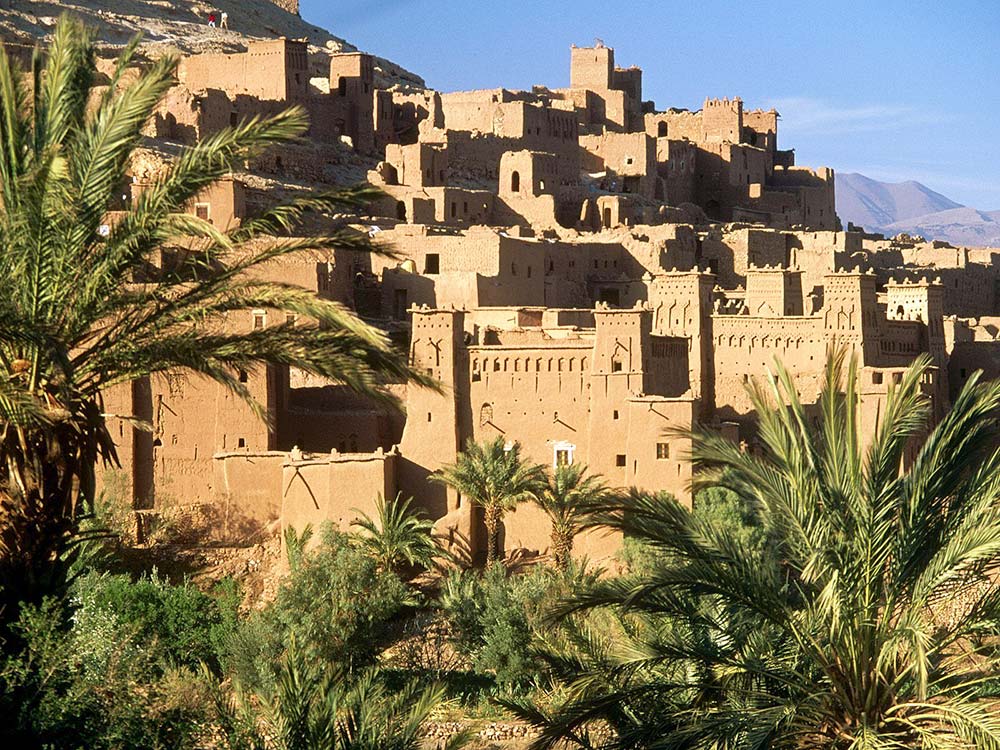
Aït Ben Haddou
Located near Ouarzazate, Aït Ben Haddou is one of Morocco’s best-known fortified villages and a UNESCO World Heritage Site.
Its earthen buildings became famous through films and international tourism.
Kasbah Taourirt
This historic kasbah in Ouarzazate once belonged to the powerful Glaoui family and remains one of Morocco’s most impressive desert fortresses.
Skoura Oasis Kasbahs
The Skoura region contains several old kasbahs surrounded by palm groves and oasis landscapes.
Many travelers consider the area one of southern Morocco’s most beautiful historical regions.
Why Many Kasbahs Are Disappearing
Modern Materials and Rural Migration
Despite their historical value, many kasbahs are deteriorating today.
Several factors contribute to this decline:
- Lack of maintenance
- Heavy rainfall damage
- Migration toward cities
- Modern concrete construction
- High restoration costs
Some younger generations prefer modern housing with easier maintenance and modern infrastructure.
As a result, certain traditional earthen villages became partially abandoned.
Restoration and Preservation Efforts
Protecting Morocco’s Architectural Heritage
In recent years, restoration projects increased across southern Morocco.
Architects, historians, and local communities work to preserve kasbahs because they represent:
- Cultural heritage
- Traditional knowledge
- Tourism identity
- Historical memory
Some restored kasbahs now function as:
- Museums
- Guesthouses
- Cultural centers
- Historic landmarks
Preservation efforts also help maintain traditional earthen construction techniques that risk disappearing.
Why Travelers Find Kasbahs Fascinating
Architecture That Feels Connected to the Landscape
Many visitors are surprised by how naturally kasbahs blend into desert scenery.
The color of the walls often matches surrounding mountains, valleys, and sand almost perfectly.
Travelers are drawn to:
- Ancient atmosphere
- Earthen architecture
- Desert landscapes
- Historical caravan routes
- Traditional Amazigh heritage
Kasbahs offer a completely different architectural experience compared to modern cities and monuments.
Frequently Asked Questions
Why were Moroccan kasbahs built from mud?
Mud, clay, straw, and earth were natural materials easily available in desert regions and highly effective for climate control.
How do mud kasbahs survive for so long?
Traditional maintenance, thick walls, dry desert climates, and strong earthen construction techniques help kasbahs survive for centuries.
What is the most famous kasbah in Morocco?
Aït Ben Haddou near Ouarzazate is one of Morocco’s most famous kasbahs and a UNESCO World Heritage Site.
What is the difference between a kasbah and a ksar?
A kasbah usually refers to a fortified residence or fortress, while a ksar is typically a fortified village containing multiple homes.
Where can travelers see traditional kasbahs in Morocco?
Kasbahs are common in southern Morocco, especially around Ouarzazate, Skoura, the Draa Valley, and desert regions near the Sahara.
Moroccan kasbahs remain one of the country’s most remarkable architectural achievements and one of the strongest symbols of southern Morocco’s desert heritage.
Built using earth, clay, and traditional Amazigh knowledge, these structures demonstrate how local communities adapted intelligently to harsh climates long before modern technology existed.
Although many kasbahs face challenges from modernization and abandonment, their presence still reflects centuries of caravan trade, family history, desert survival, and cultural identity across the Sahara region.
For travelers exploring Morocco, kasbahs offer more than historic scenery. They reveal a connection between architecture, environment, and human adaptation that continues to define the landscapes of southern Morocco today.